
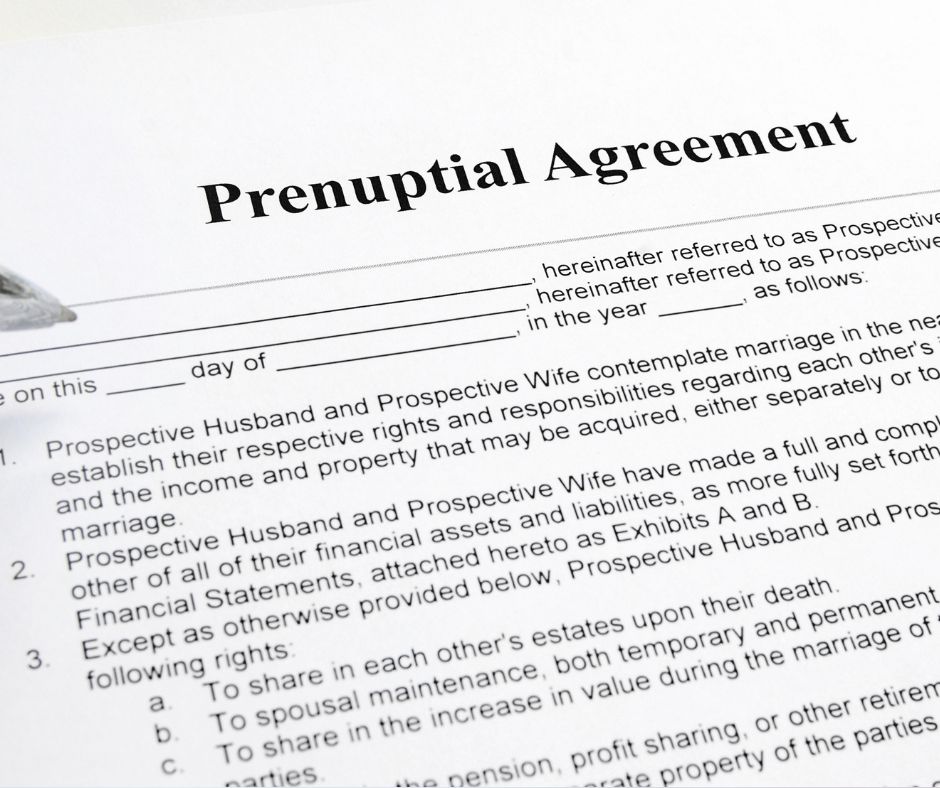
A DIY prenuptial agreement may appear to offer an inexpensive way to make financial decisions before marriage. California allows engaged couples to prepare their own prenuptial agreements, but creating a prenup that will work when it comes time to use it involves coordinating what the agreement says with what the law requires. You must follow California law’s signing requirements, exchange sufficient financial information, and use language that clearly and unambiguously conveys the terms of your agreement.
Cyrus Pacific Law focuses on prenuptial agreements for engaged couples throughout California. From our Los Angeles office, we help you understand how marriage may affect your finances, decide what you want your agreement to accomplish, and create terms suited to your circumstances. Our goal is to help both partners approach the process with information, clarity, and mutual understanding.
What Does a Prenup Address?
A prenuptial agreement is a contract that an engaged couple creates before marriage to establish financial rules for their marriage. Under California law, you can use a prenup to decide:
- Which property will belong only to one spouse, and which will belong to both;
- Who may manage, use, sell, or transfer particular property;
- How you will allocate responsibility for debts;
- How you will divide property if you separate or divorce;
- What property rights either spouse will have when the other dies;
- Whether either spouse may receive spousal support after separation or divorce; and
- Whether either spouse must create a will, trust, or life insurance arrangement to carry out the agreement.
The agreement takes effect when you marry.
How Does Marital Property Work in California?
California generally treats income and property that either spouse acquires during marriage as community property, meaning property that belongs equally to both spouses. If the marriage ends, a court generally divides the couple’s community property equally.
Separate property, which generally belongs only to one spouse, includes:
- Property you owned before marriage.
- Property you receive individually as a gift or inheritance, and
- Money that your separate property produces or that you receive from selling it.
Separate property does not always remain separate. Mixing separate funds with marital funds, using marital earnings to pay expenses associated with separate property, or one spouse contributing work to the other’s separately owned business may give both spouses rights to some of the property’s value.
With a valid prenup, you can define which property will remain separate during and after the marriage.
Can I Write My Own Prenup?
If you are asking, “Can I write my own prenup?” the short answer is yes, but the ability to create a prenup without a lawyer in California does not mean that a court will enforce the finished document. Also, if one spouse hires an attorney and the other does not, you may be unable to enforce the agreement against the unrepresented spouse, meaning you will be unable to legally compel them to follow it.
People researching how to write a prenup without a lawyer may focus on finding a form and listing their property, but creating a legally valid, effective prenup requires more than just listing information. Each partner must also receive enough information about the other’s finances, sign freely, and complete required written notices and waivers. The agreement must then explain what will happen to the couple’s property under present and future circumstances. DIY prenups often miss critical details.
What Are the Risks of a DIY Prenuptial Agreement?
A DIY form may appear complete without complying with California law or addressing the couple’s financial questions. A couple may mishandle the signing process, omit important financial information, include terms a court will not enforce, or use language that does not produce the result they intended.
Missing California’s Signing Requirements
A prenup must be in writing and signed by both partners, and each partner must receive the final version at least seven calendar days before signing. Each spouse must also receive advice to seek independent counsel, meaning a separate lawyer who represents only that partner, at least seven calendar days before the couple signs the final agreement.
A partner who proceeds without independent counsel must sign a separate written statement saying they choose not to have their own lawyer. A generic form may not include everything required in the statement to waive the right to an independent attorney.
Providing Incomplete Financial Information
Financial disclosure means information about a person’s property, income, and debts. For a prenup to be valid, each partner needs enough information to understand what the other owns and owes before deciding which rights the prenup will change. That may require disclosing real estate, investment accounts, business interests, retirement savings, deferred compensation, and debts.
Incomplete disclosure does not invalidate every agreement, but it can make an agreement significantly more difficult to enforce. A court may reject an agreement if one spouse did not receive fair disclosure of financial information or waive the right to disclosure.
Including Terms California Will Not Enforce
A couple may follow California’s signing process and still include terms that a court will not enforce. Some terms go beyond what a prenup may legally cover. Others may be unenforceable because they are unconscionable, meaning so extremely unfair that enforcing them would be unjust.
A couple cannot use a prenup to establish child support or childcare provisions, and California imposes special restrictions on provisions that limit or waive spousal support (i.e., alimony). If a spouse agrees to waive a claim to spousal support, they typically must have an independent attorney review the agreement and provide advice about that decision.
Using Ambiguous Language
You and your partner may understand what you mean when you discuss your plans, but a prenup must turn that understanding into written rules that apply to specific property and events and clearly identify who, what, and when. Language is ambiguous when it can reasonably support more than one interpretation, and many DIY prenups fail to use clear, unambiguous language. If you cannot precisely determine what an agreement means, precisely enforcing it is not possible.
Failing to Account for Contingencies
A prenup can state a clear rule but fail to explain how that rule applies after circumstances change. A contingency is a future event that may affect the couple’s property, income, debts, or need for financial support. Considering contingencies during drafting helps the agreement continue to carry out the couple’s decisions as their finances and property change. Your attorney can help you address likely and possible contingencies.
Create a Legally Valid, Tailored Prenup
A DIY prenuptial agreement may reduce the initial drafting expense, but a DIY document may prove invalid at precisely the time you need it—when you try to enforce it. Careful planning can help you and your partner begin your marriage with a shared understanding of your finances and a legally valid agreement.
Cyrus Pacific Law helps engaged couples throughout California create prenuptial agreements suited to their property, finances, and plans. Contact our Los Angeles office to discuss how we can help.
Legal References Used to Inform This Page
To ensure the accuracy and clarity of this page, we referenced official legal resources during the content development process: